Authentication: OpenID Connect
1-9-2023
About OpenIdConnect
OpenID Connect (oidc openidconnect):
- Is a simple identity layer on top of the OAuth 2.0 protocol.
- Allows Clients to verify the identity of the End-User based on the authentication performed by an Authorization Server, as well as to obtain basic profile information about the End-User in an interoperable and REST-like manner.
- Allows clients of all types, including Web-based clients, to request and receive information about authenticated sessions and end-users.
In OpenID connect there are flows defined for the protocol implementation. These flows are regularly updated, making anything I write down here deprecated in a year (probably). Please check the OpenID foundation website for up-to-date info.
Authorization code flow explained
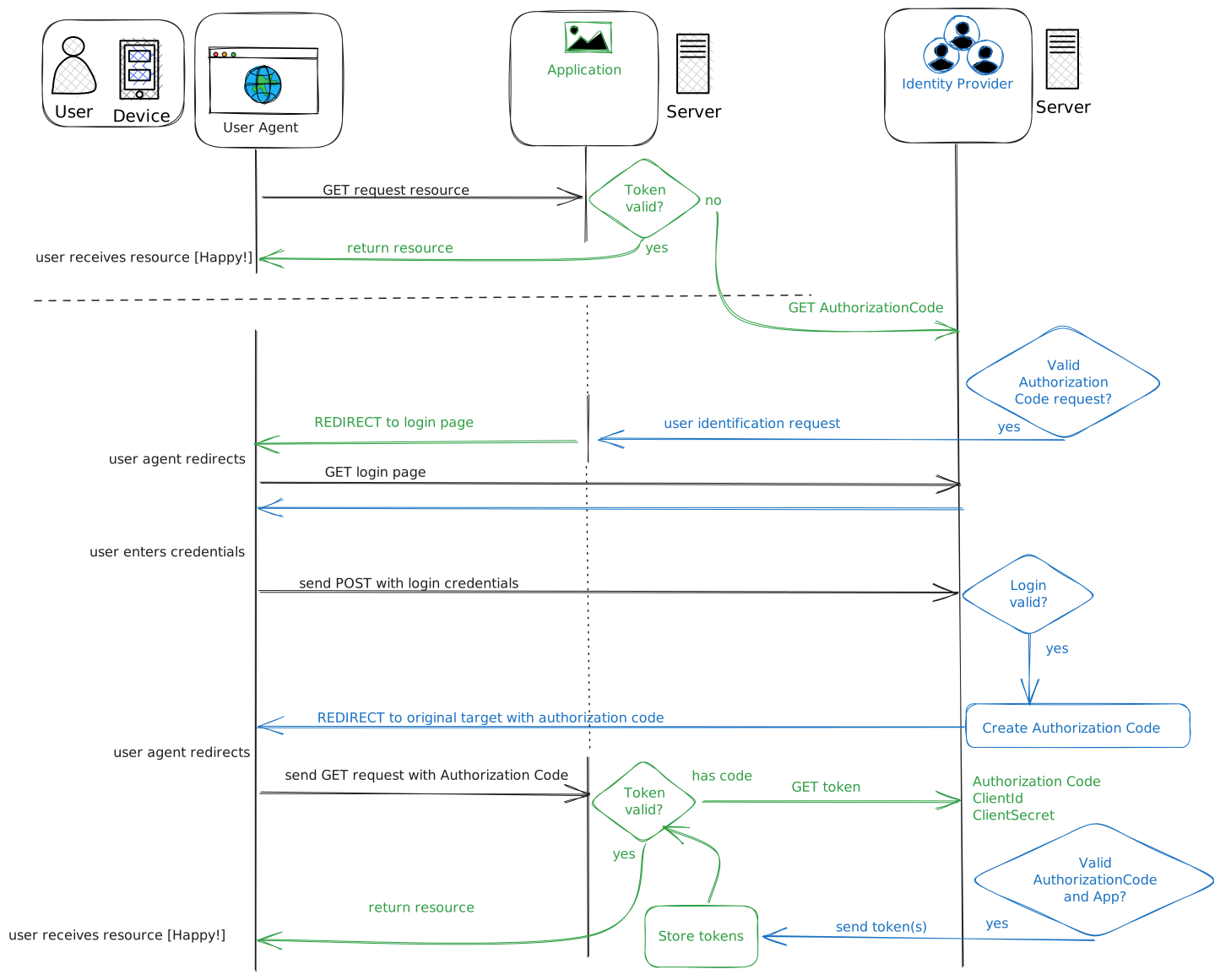
The user wants to visit your webpage. So it enters the url in the browser, and hits enter.
Behind the scenes:
- The User agent sends a request for a resource to the Application.
- The Application checks for a valid token
Happy scenario: Token is available and valid:
- The application will return the requested resource
If there is no token and no authorization code sent in the request; or the token is invalid:
- The application will send an Authorization code request to the identityprovider
- The identityprovider will validate the authorization code request.
- The application will redirect the user to the identityprovider login page. The IdentityProvider will ask the user for authentication credentials.
- The user enters credentials and posts it by clicking the login button. A POST request is sent to the IdentityProvider.
- The IdentityProvider processes the credentials.
- When valid, the identityprovider sends an authorization code back to the user with a redirect action (to the original target).
- The User Agent follows up on this redirect and go to the original target (Application).
- The Application detects the Authorization code send along, and calls the Token endpoint on the identityprovider, without any user agent interference.
- The Identityprovider validates the code (safety measure) and sends an id-token, access-token with the claims back to the Application.
- The application can create a session with the user, and store the token in the backend (in the sequence diagram). Another option is to store the token in the user agent, whatever you prefer.
My thoughts on OpenID Connect
I am a fan for using OpenID Connect and OAuth 2.0 in dotNET projects. I think it is the best thing out there as I type this down (1-9-2023). In my opinion it is quite easy to implement in a .NET (Core) project. I might write a little blog about this later. I have done the device-flow implementation for a desktop app, and the authorization code flow for web in 2023. Both .NET 6 applications. Earlier I implemented this in .NET framework as well, which takes a little more effort.
- It is new compared to SAML.
- It is a proven technology.
- It receives regular security updates. Be aware of that when implementing OpenID, because you will need to keep it up to date.
Resources
Microsoft supported flowsDarut K explains all the flows (although the flow names are missing)
How OpenID Connect Works - OpenID Foundation